Mac 1.8.0 unifies online, local and subscription statistics, verifies actual animation writes and explicit timing, adds ChatGPT usage and corrects MiniMax reasoning settings. Windows and Linux also provide 1.8.0.
Read morePage 4 of 6 · 21 posts per page. There's more to read. Glad you're here.
Back to home →
Mac 1.8.0 unifies online, local and subscription statistics, verifies actual animation writes and explicit timing, adds ChatGPT usage and corrects MiniMax reasoning settings. Windows and Linux also provide 1.8.0.
Read more
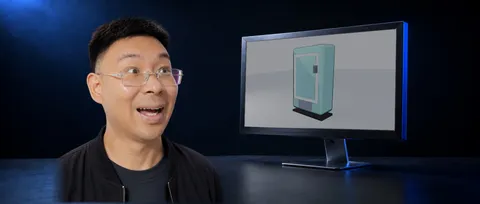
Using local Qwen3.8-27B modeling with blender-mcp, then testing it in LocalBrain for five rounds: the model can be done step by step, but slowly; The delivered black map is just one checkbox short; if it's not visible, it counts as complete, and only after viewing the final render can you use the correct modification.
Read more
Local AI is not a developer's toy. A comprehensive four-piece set of models, warehouses, software, and workflows is explained, plus three ideas you can copy
Read more
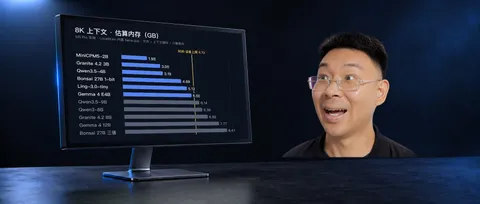
Bringing 11 low-memory local models released this year to the local machine, using LocalBrain's built-in llama.cpp unified memory, speed, and tool calls: 6 under 8K context are within the default limit of 8GB devices. Qwen3.5-9B takes up 3GB less than last year's Qwen3-8B, and 27B of 1-bit can run but only has manufacturer numbers. This batch of models has also been added to LocalBrain's discovery page.
Read more
LocalBrain 1.2.65 can run MiniMax H3's multi-reference plates (REF2VA) locally, with up to 9 images at once. On a 64 GB M5 Pro, I used 0, 1, 2, and 4 reference images to generate a 3-second video of 960×544 each with 0, memory, copied details, and reasons why Turbo wouldn't open.
Read more
Qwen3.8-Flash-Next on a 64GB Mac ran five offline web challenges: 1 delivered, 3 executable, 1 abandoned. Every timeout, crash, and long context stall ultimately became a universal fix for LocalBrain.
Read more
llama.cpp 0.4 rewrote the memory boundaries of large models with lazy loading, streaming quantization, and Apple RDMA. But LocalBrain's 64GB Mac records prove that a file larger than memory can boot, but that doesn't mean long contexts can run at full speed.
Read more
MiniCPM5-2B packs 130,000 contexts, agent training, and official GGUF/MLX into 2.52B parameters; The real highlight isn't the benchmark scores, but whether it qualifies as a resident actuator in local software.
Read more

Just listening to 127.0.0.1 doesn't mean browsers can't encounter it. Three recent official security announcements plus a set of completely isolated CORS tests break down the most easily misunderstood security boundaries of local AI.
Read more
35B multimodal agent is open source, and online endpoints are currently free; Whether Mac capacity is sufficient means runtime is already connected.
Read more
From installation and shortcuts to programming assistants and local models, it explains Omaly's features and getting started with it.
Read more
Six questions are made and reviewed with public evaluation, with free rainy night reasoning mini-games, complete clues, and answers.
Read more
Ollama switched Mac inference to MLX kernel half a year ago, and now a bunch of challengers claiming to be faster have emerged. I didn't run the tests, just put the scores published by the four companies on one table—the result was: none of them were running the same set of problems.
Read more
The real change in GPT-6 Astra isn't just a slight increase in chat score, but the simultaneous integration of computer operation, long tasks, and high-risk capabilities into the product. This article breaks down the available range, API costs, security boundaries, and how ordinary people choose based on OpenAI's official materials.
Read more
Instead of discussing superficial questions like "Is there a Windows version of the software?", let's answer two practical questions: which local models and tools can run on an 8 GB NVIDIA graphics card, and what makes the Mac's unified memory and complete multimedia chain strong.
Read more
HyphenBox 1.0.7: Harness media tools, image/video tasks and recovery, now packaged for Mac, Windows and Linux.
Read more
On September 2, Google released 3.8 Flash and 3.8 Flash Cyber all at once. Same core, two faces: one cheap and easy to use, accessible to everyone, the other specialized in fixing vulnerabilities but only for trusted defenders. What's interesting isn't who is stronger, but where this dividing line lies.
Read more
DeepSeek turns vision into the Agent's perception entry point and opens up a 305B weight. The latest minimum visual GGUF is still about 67.8GiB: 64GB Mac is not suitable for stable deployment today. This article is based on official data and files, and does not use local running impersonation.
Read more
Fable 5.1 and Mythos 5.1 are the same underlying model, but were split into public and trusted access versions. The base unit price hasn't dropped, but cache reads are 75% cheaper; What truly changes are the task economics, security boundaries, and access methods for long-term agents.
Read more
The 125B main model of Qwen3.8 Flash Next activates only about 6B parameters per token. With the help of Atomic M64 custom shards and LocalBrain, I completed text, tool calls, visual, and continuous generation tests on a 64GB M5 Pro Mac.
Read more
Mac 2.3.2 adds Android fixed read-only commands and nuclei template filters; verification hits CVE-2021-41773 on httpd 2.4.49 and reproduces it with a self-written PoC.
Read more