
Info: Machine translation This post was machine-translated from the Chinese original. Wording may be rough in places — the Chinese version is authoritative.
Summary Official documents, community cases, and legal discussions are organized into three layers, clearly explaining what it has changed and where the dangers lie HyphenTech · 2026-10-16
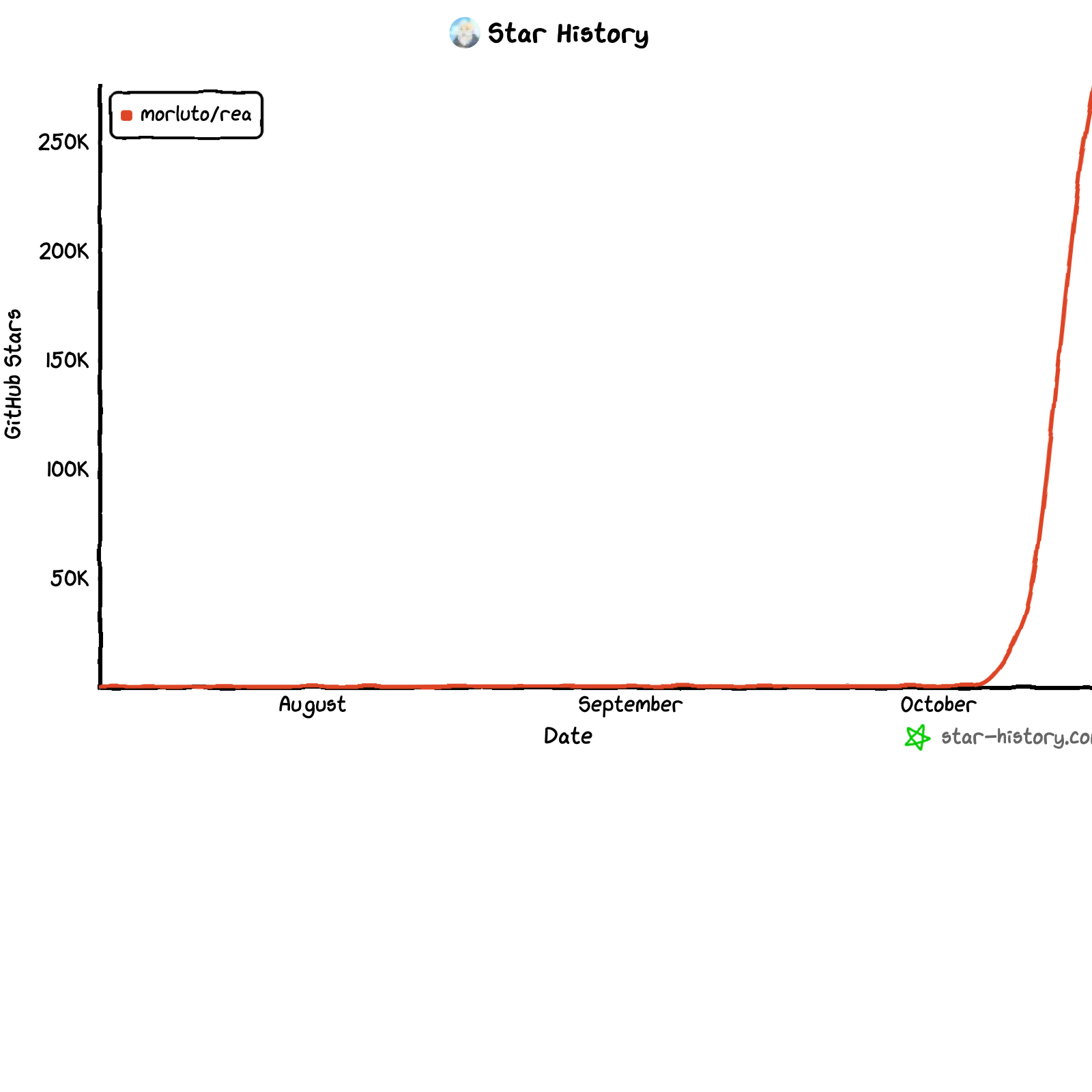
Over the past week, the most outrageous curve on GitHub belonged to a project called REA. From August to September, its star line was almost flat, but in October, it suddenly surged vertically: about 100,000 stars were swept away in one week, and by the time I wrote, there were 275,000 stars and 69,000 forks.
It wasn’t the security circle that pushed it onto the trending list, but AI bloggers. Because what REA does sounds like science fiction: just attach a command to your AI Agent, and it can disassemble closed-source software like WeChat, Alipay, and Adobe Suites, tell you how a feature works, and even rebuild it for you.
This article doesn’t write installation tutorials or test it—I went through official documents, community cases, and legal discussions to answer three questions: What exactly is REA, what has it truly changed, and why the most exciting usage is actually the most dangerous.
🎯 What is REA: Not a new decompiler, but an agent’s “investigative license”
First, let’s talk about the most easily misunderstood point: REA itself did not invent any decompilation technology. Tools like Ghidra, IDA, Hopper, and JADX have existed for many years; software disassembly is an old skill in the security community.
REA stands for Reverse Engineer Anything. Its true identity is a layer of MCP bridge: allowing AI Agents like Claude Code, Codex, Cursor, and Gemini CLI to call those established analysis tools through a unified interface. Installation is just a line npx rea-agents setup: select the agent you want to integrate, it will show the changes to be made, back up the original configuration, and after confirmation, complete registration.
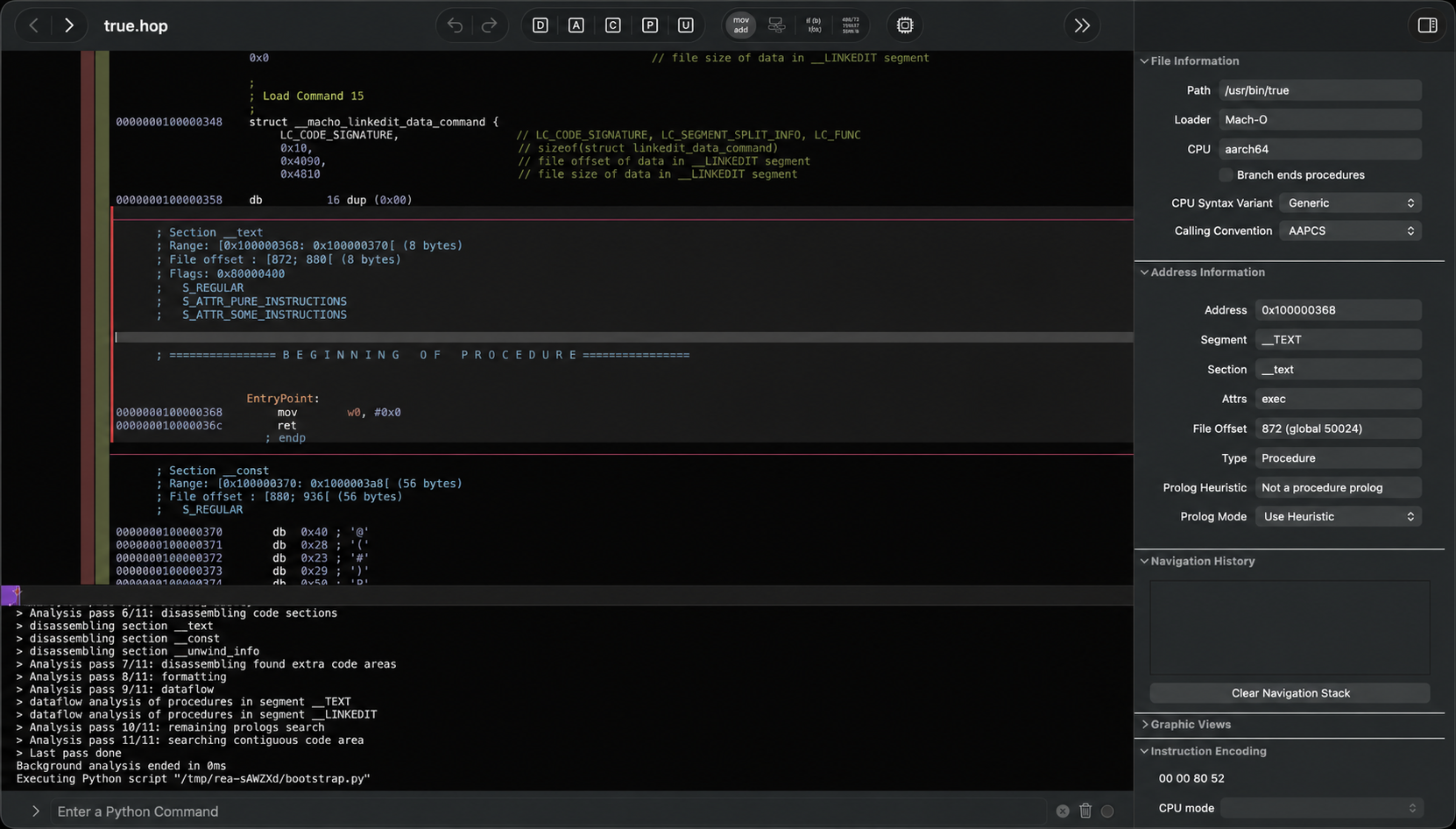
In the past, if you wanted AI to help you reverse engineer, you had to be someone who could do reverse engineering: install IDA, configure plugins, and know what to ask. Now the threshold has become a single command and a nod in confirmation. REA technology isn’t new; what’s new is the people using it.
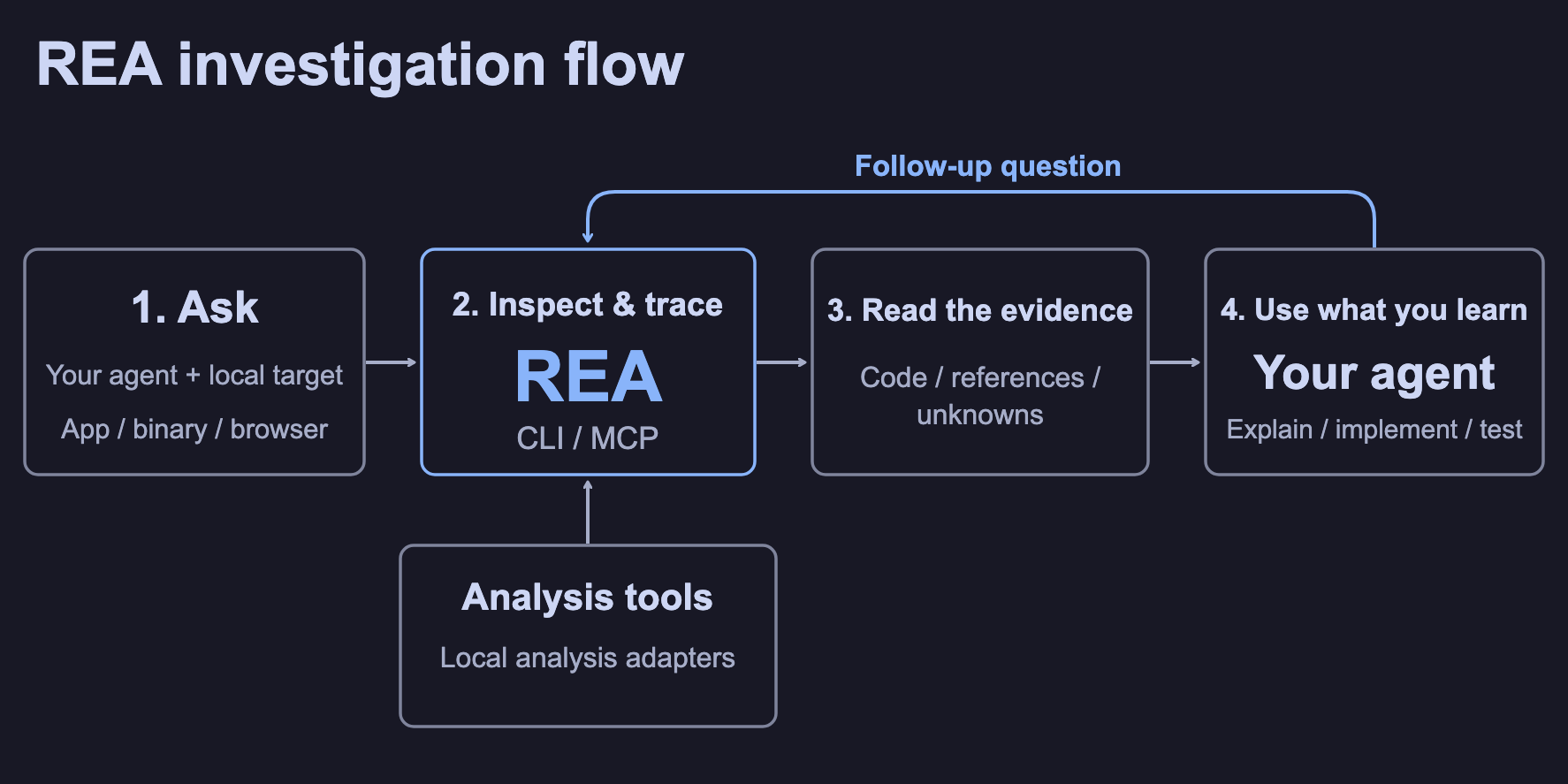
Its working model consists of three steps: decompilation (recovering clues like strings, function names, call relationships, and pseudocode from the target) → understanding (following the evidence to explain how a function actually works), → reconstruction (the agent writes the implementation for your project using normal editing and testing tools based on the understanding). The key design is that every step includes evidence: REA returns not only the conclusion but also the functions, strings, cross-references behind the conclusion, and the limitations of that conclusion.
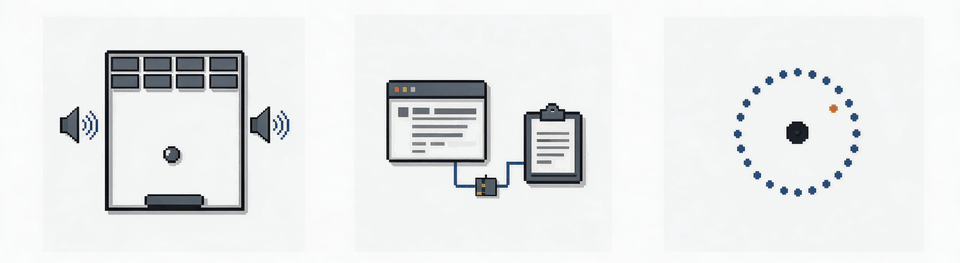
The coverage is almost exaggerated: native binaries, JavaScript/Electron applications, .NET assembly, Android APK, websites, firmware, SQLite databases, pcap packet capture, and even dependency information embedded in Go and Rust binaries. In official cases, there was a case where 16-bit bullet angle calculations from the 1990s DOS game TH04 were restored to C++, some tracked Notion’s Electron clipboard bridges, and some reconstructed DX-Ball’s audiovisual computation using 3,205 original x86 use cases.
🔍 What really changed: the wall of the cleanroom was torn down
If the story only talks about “lowering the threshold,” this is just an ordinary tool report. What is truly worth unfolding is what it dismantles.
First, a basic legal fact.
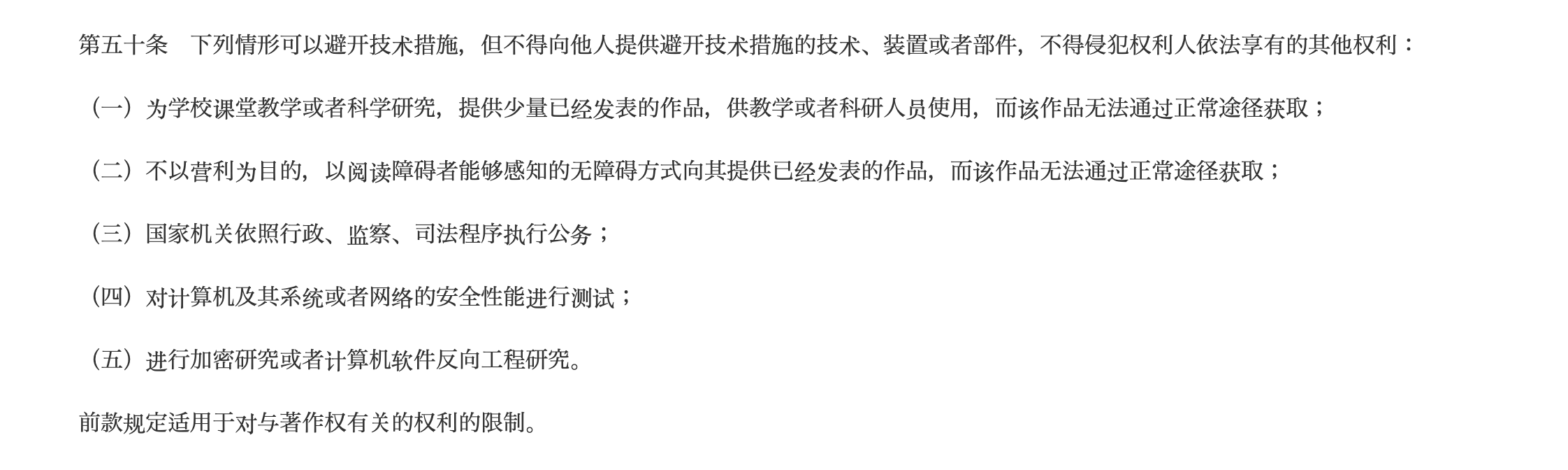
Dismantling someone else’s software for learning research is possible in most jurisdictions: China’s Computer Software Protection Regulations Article 17 allows software to be used for learning research and design ideas, and the 2020 amendment to Article 50 of the Copyright Law leaves a door for “reverse engineering research”; The US DMCA 1201(f) leaves an exception for interoperability reverse engineering; The EU is even more thorough, prohibiting contracts from decompiling for interoperability is completely invalid.
Copyright protects how the code is written, not the function itself—someone else has a useful search function, and you write a similar one yourself. From a copyright perspective, it’s not illegal.
The problem lies in ‘how you wrote it.’ The software industry invented an old method called ‘clean room development’: one group dismantled the other’s product and wrote only the function manual; the other group had never seen the other’s code and wrote it from scratch according to the manual. There was a wall between the two groups. This wall would be evidence in future lawsuits—proving the new code was written independently.
REA tore down this wall.
The agent reads the decompiled results, and the new code is still the same agent. “Read” and “write” are closed in the same black box. You can’t prove to the court that AI “didn’t see” the decompiled result when writing code—the internal processes of large models are inherently unauditable. Someone on Hacker News gave this practice a harsh nickname: intellectual property laundering.
The team that used AI to replicate seven Adobe software pieces explicitly forbade members from touching Ghidra and REA, with a straightforward reason: the project was too exposed, fearing immediate lawsuits.
The gaming community pushed the controversy to an even more extreme point: byte-level matching decompilation, where the reconstructed source code is compiled and not a single byte worse than the original program.
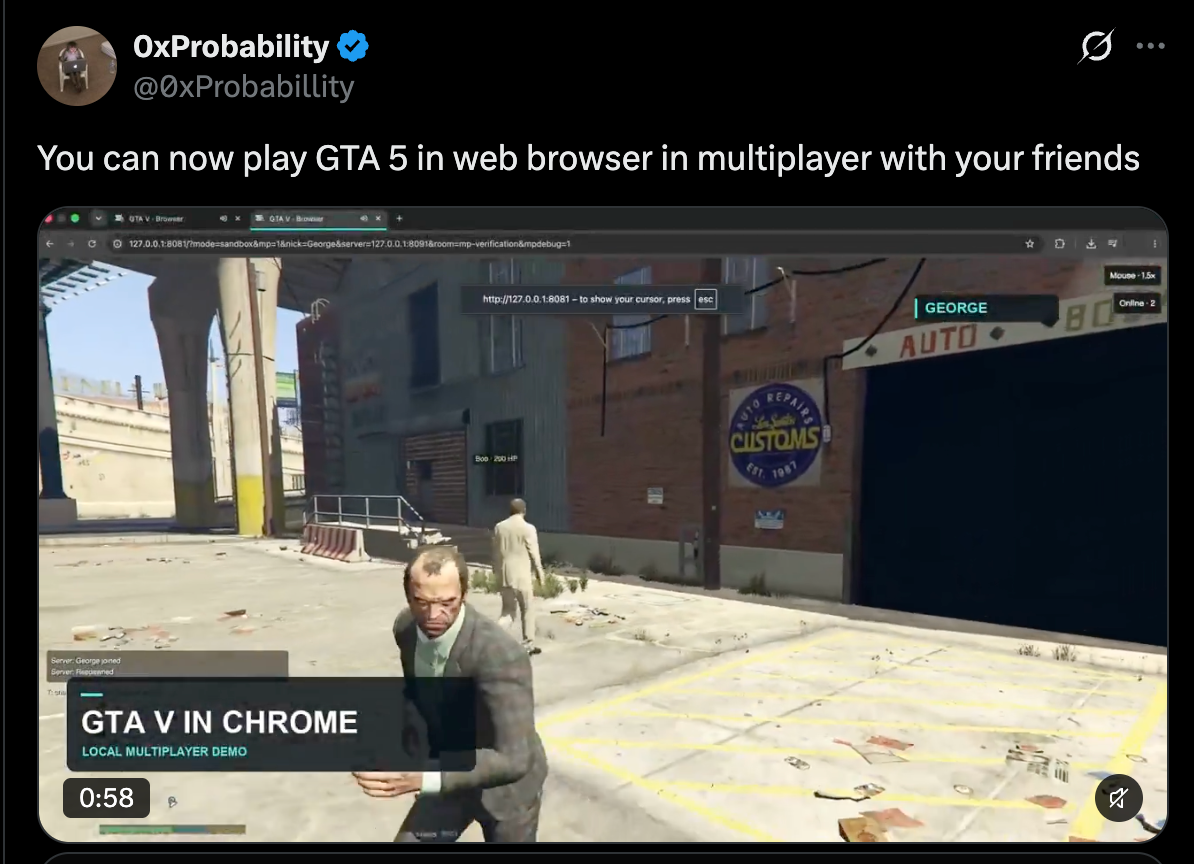
The pursuit of ‘I didn’t write exactly like you’ is pursuing, while ByteDance’s match aims precisely to ‘write exactly like you.’ On October 6, a website that allowed playing GTA 5 in a browser was taken down within just a few hours of going online, and legal teams from Rockstar, Activision, and Bethesda reportedly acted at lightning speed.
Here, two things need to be distinguished: “dismantling and analyzing” and “reconstructing according to the law” are two legal actions. The REA’s disclaimer states that it serves legitimate research, education, and analysis, all of which are legally justified; but it also includes “reconstruction” in its use, and the word “reconstruction” does not have a corresponding exemption in any statutory provision. The project places the responsibility on you.

⚡ The data hurdle: local analysis doesn’t mean data doesn’t go out
REA’s documentation states that analysis runs locally, and this statement is true—Ghidra and JADX do run on your own computer. But for the agent to understand the analysis results, it must send the decompiled code snippets, call relationships, and strings to the model service provider behind it. The internal structure of the software you disassembled just leaves your device.
If you dismantle a program you wrote yourself, that’s fine. If you dismantle software given to you by a client or something with a confidentiality agreement, that step itself may constitute a breach of contract—regardless of whether you disclosed the results. Some bloggers have encountered restrictions and lag from model service providers when dismantling Jianying using REA. This is a guardrail—where and when to block them is up to the provider, and the standards are not transparent.
💰 Who stands right in the middle of the risk
Let’s look at these parties together: the project says the user is responsible, the model provider says we’ll block it but doesn’t tell you the standard for blocking it, and the software company that was dismantled holds the user agreement and lawyers. The 2003 Bowers v. Baystate case in the US has already ruled that the prohibition clause in user agreements against reverse direction is valid, and after reverse engineering, the competing party pays compensation for breach — in other words, the “I have read and agreed” you clicked could itself be a wall.
The only one truly standing right in the middle of the risk is the one who typed the phrase, “Help me reverse this app.”
So my judgment is divided into three layers. Scenarios suitable for safe use: dismantling your own software to retrieve lost implementations, analyzing authorized code, conducting security research, independently implementing functions after learning others’ design concepts—these have been legitimate uses for decades of reverse engineering, and REA has just made them easy to use.
Scenarios to consider: After dismantling commercial software, you copy the functions and the cleanroom wall disappears, making it difficult to prove independence is something you bear alone. Clearly avoid touching: Reverse engineering online systems and then accessing and scraping other people’s servers—this corresponds to criminal law in China, not a civil dispute; And directly modifying and releasing the code resources generated in reverse engineering is standard copyright infringement.
For software developers, this is also a reminder. The advice from professional reverse engineers: as long as the program is in the user’s hands, it can be dismantled, and the only safe way is to put the key logic on the server. REA hasn’t made software disassembly possible—it always has—it has made software disassembly easy for everyone.
If a moat is built on ‘no one understands my binary,’ now it’s basically nonexistent.
🧩 Wrap up
Is REA worth installing? For developers and security learners, it’s worth it. The MIT protocol, native analysis, and evidence chain design are solid; installation is just a single command, and static JavaScript analysis doesn’t even require any decompilation engine.
It turns a craft that once required years of skill into an Agent investigation, a direction that is progressive in itself.
But don’t be swayed by the phrase “reverse everything.” Tools lower the threshold to a single line of order; the legal threshold hasn’t dropped a penny. Use it to understand the world, don’t use it to transport others’ worlds.
References
Self-made software
Versions, changes and supported installers all come from the same public release records.
LocalBrain
A local AI toolbox for transcription, speech, images, video, and MCP tools. Features vary by platform version.
View public downloads and updates ↗HyphenBox
A free model API radar and local router, with ongoing availability checks and keys kept on your device.
View public downloads and updates ↗ScreenLex
Turn subtitles from your own films and shows into an English vocabulary library, entirely offline.
View public downloads and updates ↗HyphenScreen
Screen recording and editing with a Resolve-style timeline, automatic redaction and pre-export checks.
View public downloads and updates ↗Late nights and burned API credits went in,a cup of tea comes back out — only if you feel like it.
Scan with WeChatPress and hold to save the image, then open it from your album in WeChat Scan







Comments
Loading comments…