

Info: Machine translation This post was machine-translated from the Chinese original. Wording may be rough in places — the Chinese version is authoritative.
This article clearly explains NVIDIA’s chip controls and political maneuvering
Friends, let’s first look at two announcements that were four days apart. On November 8, Nvidia’s board of directors still said they maintained confidence in Jensen Huang and his leadership team; On November 12, Jensen Huang resigned as president, CEO, and director, effective immediately, with CFO Colette Kress temporarily taking over.
In 33 years, a founder brought the company to the heart of the AI era; In just 4 days, the board went from publicly supporting the company to accepting his resignation. This reversal wasn’t because of a sudden buzz from a single gossip, but because private breach, company investigations, chip exports, and political pressure converged at the same time.
**Jensen Huang’s personal issues are the fuse; Nvidia’s long-term reliance on the founder’s governance structure is its real weakness, while Washington politics has magnified this crisis into an industry event. **
Why the Board changed its stance: Private dishonesty has crossed the company’s red lines
On November 8, Jensen Huang sent an open letter to NVIDIA employees, admitting “I was unfaithful to my wife,” apologizing to family, colleagues, the board, partners, and shareholders, and expressing support for the investigation and full cooperation. The company’s original statement did not name anyone or admit to leaking confidential information.
The board launched an independent investigation on the same day. On November 10, the independent directors hired former acting U.S. Attorney Kim Joon of the Southern District of New York and an external law firm to intervene. At this point, the board was dealing with the highest leader’s credit, potential conflicts of interest, and shareholder liabilities, no longer just his family affairs.
The New York Times also cited five people who had worked at NVIDIA reporting that Jensen Huang had an extramarital affair with a subordinate executive. This claim has not been publicly confirmed by the parties involved, but it points to a direct issue: Nvidia’s code of conduct requires employees to avoid conflicts of interest caused by private relationships, and top executives should also be bound by this rule.
SEC documents show the board accepted the resignation on November 11. Ongoing investigations, superior-subordinate relationships, and uncertainty over succession threatened the company’s overall interests, so the board chose to cut off Huang’s personal ties with the company. **A company that has relied on its founder for 33 years only realized on this day that personal credit is also infrastructure. **
$4.8 billion in equipment procurement, connecting private relationships to the global computing power business
The New York Times, citing ImportGenius’s trade records, reported that from June 2024 to February 2026, Megaspeed’s affiliates in Malaysia purchased at least $4.8 billion worth of advanced AI equipment containing NVIDIA chips and technology. With such a large scale and connections to Chinese clients, overseas data centers, and export investigations, Jensen Huang’s private relationships with client executives naturally came under commercial scrutiny.

Whether these devices were illegally transported is still under investigation, and both NVIDIA and Megaspeed deny any violations. What is truly worth understanding for ordinary readers is that this business is no longer happening only at customs. Chips can be left in the Malaysian data center, customers can purchase computing power through cross-border networks, and the location of goods and users can be separated.

It’s like you don’t need to buy a game console at home; you can just remotely connect to someone else’s machine and still play. In the past, export rules mainly focused on physical goods, but cloud services require regulators to answer a new question: how should remote controlled technology be approved, tracked, and enforced?
The U.S. Remote Access Security Act is specifically designed in this direction. On January 12, 2026, the House passed it by a vote of 369 to 22, then sent it to a Senate committee, but it has yet to take effect. Once it continues, overseas data centers will face more than just commercial risks, including clearer licensing and compliance requirements.

Beyond export controls, both U.S. parties are vying for the right to explain the matter
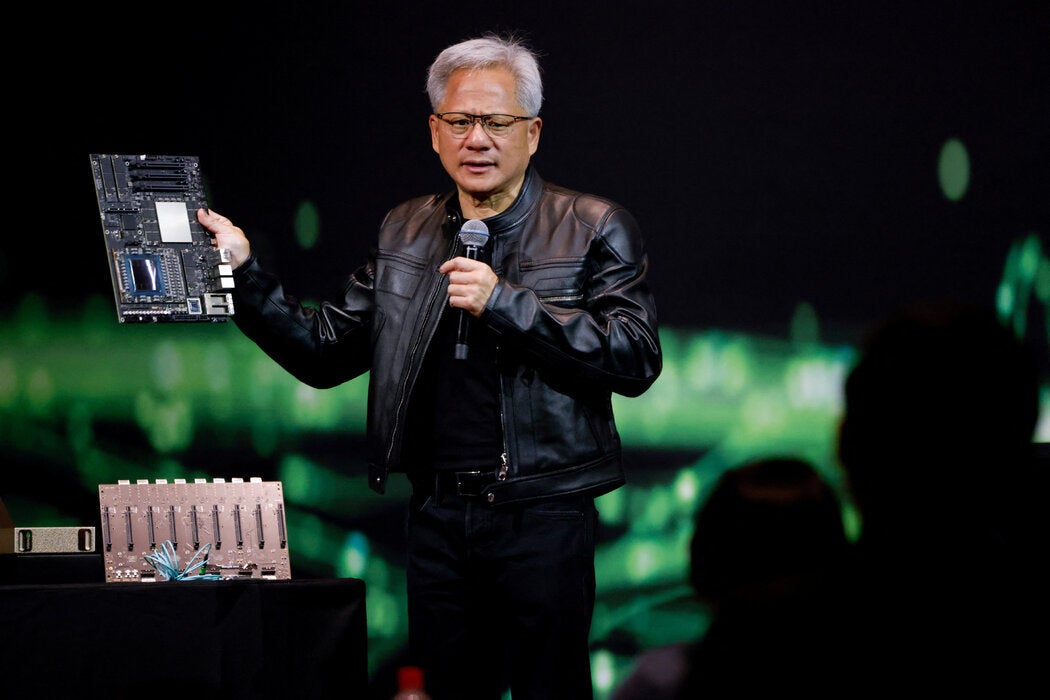
Jensen Huang has long opposed excessive restrictions on chip sales to China. In 2025, he publicly stated in Taipei, “In short, export controls have failed,” reasoning that if Chinese companies cannot buy NVIDIA chips, they will use their own chips. This viewpoint serves two things simultaneously: the continued expansion of the U.S. technology ecosystem, and Nvidia’s continued market and CUDA advantages.
If you then arrange Washington’s public actions by date, you can see how this crisis has entered partisan politics.
| Date | Subject | Open action |
|---|---|---|
| October 29 | Media and Avi | The New York Times reported intelligence assessment; NVIDIA stated that the related interactions were normal customer engagements |
| November 3rd/4th | Democratic Party | Midterm elections; The media then determined that the Democrats had won control of both the House and Senate for the next term |
| Sent on November 4 / Published on November 5 | Republican House Committee | The three committees requested that Jensen Huang attend a closed-door briefing on November 18 |
| November 9th | Democrat Jeffries | Demanding more answers and pushing to include chip restrictions on China in the annual defense bill |
| November 10 | Republican Cramer / Democratic Schumer | Cramer demanded his resignation; Schumer demanded an explanation of Trump’s strong support and called for the advancement of the Chip Surveillance and Security Act |
| November 11 | Board/Democrat Warren, Coons | The board accepted his resignation; Two senators signed a letter preserving records of exports and related communications |
| November 10 incident / November 13 report | Trump | The New York Times reported that he once called to encourage Jensen Huang to keep his position |
The Republican House committee demanded briefings, and Senator Cramer publicly called for his resignation; Democrats Jeffries, Schumer, Warren, and Coons pushed for briefings, legislation, and record-keeping in their respective directions. Trump, however, was reported to be trying to retain Jensen Huang. There was both partisan competition and divisions within the Republican Party, the White House, and Congress.
Republican lawmakers emphasized foreign intelligence, national security, and export enforcement; Democrats, in addition to discussing security, can simultaneously advance accountability for tech giants, regulatory review, as well as data center and employment issues. The midterm election results have heightened Democrats’ expectations for the next Congress’s agenda, while Huang’s scandal has reduced the benefits of continued defense for him. **Both parties are using this window to advance their own technology policy agendas. **
Therefore, concentrated pressure is not surprising. It’s not that anyone needs to personally direct every step, but that once the situation reaches this point, the cost of continuing to wait and see increases while the benefits of proactively expressing and promoting investigations increase. Next, it depends on whether closed-door briefings continue, whether related bills gain cross-party support, and whether the Senate truly advances before these actions will become a long-term policy turning point.
The New York Times also reported that in August 2025, Nvidia’s general counsel questioned the Department of Commerce investigators about the Megaspeed case, mentioning that higher authorities had approved the contact. Investigators were concerned about procedural disruptions, so the case was subsequently referred to the Department of Justice. This detail indicates that the way Nvidia contacted regulators itself became part of the investigation dispute.
Regarding Huang Le’s spy identity, surveillance, and classified memorandum, the main information still comes from anonymous intelligence reports. China’s Ministry of Foreign Affairs denies the so-called “spy narrative,” and on November 12, U.S. Attorney General Todd Blanche stated that the DOJ has not yet reached a conclusion on whether Huang Le is a Chinese spy. This unresolved status needs clarification, but it does not prevent us from analyzing how open action has changed political pressure on Nvidia and Washington.
The real problem Jensen Huang left behind: the company and market are too dependent on one person
Nvidia’s success has long relied on Jensen Huang’s technical judgment, personal charisma, and external lobbying. The New York Times reports that he has more than 60 direct subordinates, and the company lacks a clear successor. When things are going well, this concentration brings speed and execution; But when private credit, customer investigations, and policy conflicts arise together, it becomes a single point of failure.
In 2018, Intel CEO Brian Kerzanich resigned due to a mutually agreeable close relationship with employees. This old case shows that corporate governance rules do not lose meaning just because one person has made great contributions. Jensen Huang faces an even more complex situation, as Nvidia stands at the crossroads of global chip regulation and AI competition.
The technological form is also ahead of regulation. Hardware, CUDA, overseas data centers, and remote leasing have already formed a new supply chain, with rules still supplementing the jurisdiction of remote access. Jensen Huang’s departure will not change this contradiction; his successor will still have to deal with the same set of technology, customers, and policies.
Bloomberg commented that “China has become the biggest loser,” a statement that has turned complex industrial competition into a winning slogan. In the short term, Chinese companies have lost a key lobbyist against comprehensive decoupling, and uncertainty over overseas computing power has indeed increased; The long-term outcome will also depend on domestic chips, software ecosystems, actual computing power costs, and alternative supply. **Jensen Huang’s exit is pressure, not the end. **
Next, focus on what truly changes your judgment
First, look at the original documents—don’t just read secondary transcripts. Nvidia announcements, SEC documents, letters from members of Congress, and bill status can directly answer who did what. Comments can be bold, but facts must be accurate.
Second, keep an eye on Nvidia’s November 17 earnings report and call, follow-up disclosures of the independent investigation, the official CEO candidate, and the progress of the remote access bill in the Senate. It especially depends on whether both parties are willing to turn public statements into a joint vote.
To test jade, it must be fired for three full days; to judge timber, seven years must be taken. — Bai Juyi, “Five Poems of Speech, No. 3”
Jensen Huang’s era is over, but Nvidia’s problems are not over. Companies need to rebuild trust, the U.S. must decide how to manage remote computing power, and Chinese companies must arrange their technology and supply under greater uncertainty. The real answer lies in these follow-up actions.
Main sources of verification
- Nvidia: CEO Change Announcement on November 12
- Nvidia: November 8 Board Investigation Statement
- NVIDIA: Full Letter from Jensen Huang Employee
- U.S. SEC: NVIDIA 8-K resignation documents
- New York Times: Megaspeed Investigation and TNVIDIA Lawyer Email
- The New York Times: $4.8 billion procurement and congressional briefing requirements
- U.S. House of Representatives: Original Announcement Requiring Jensen Huang to Give a Closed-Door Briefing
- Ministry of Foreign Affairs: Regular Press Conference on November 12, 2026
- Reuters: Department of Justice has not yet reached a conclusion on Huang Le’s spy identity
- U.S. Congress: Status of the Remote Access Security Act
- NPR: Democrats Win Control of Both Chambers in the 2026 Midterm Elections
- Politico: Republican Senator Cramer demands Jensen Huang’s resignation
- Reuters: Schumer Pushes Chip Surveillance and Security Act
- Politico: Jeffries pushes for chip restrictions in defense bill
- Warren and Coons: Original Letter Requesting Retention of Avida’s Export Records to China
Self-made software
Versions, changes and supported installers all come from the same public release records.
HyphenAssistant
Continue your computer’s DeepSeek Harness session from a phone browser. The service, computer and network must stay online; model costs follow your existing setup.
View public downloads and updates ↗LocalBrain
A local AI toolbox for transcription, speech, images, video, and MCP tools. Features vary by platform version.
View public downloads and updates ↗HyphenBox
A free model API radar and local router, with ongoing availability checks and keys kept on your device.
View public downloads and updates ↗ScreenLex
Turn subtitles from your own films and shows into an English vocabulary library, entirely offline.
View public downloads and updates ↗HyphenScreen
Screen recording and editing with a Resolve-style timeline, automatic redaction and pre-export checks.
View public downloads and updates ↗Support HyphenTech
Late nights and burned API credits went in,a cup of tea comes back out — only if you feel like it.
Save the QR codeScan with WeChatPress and hold to save the image, then open it from your album in WeChat Scan

WeChat tips · Any amount welcome




Comments
Loading comments…