Info: Machine translation This post was machine-translated from the Chinese original. Wording may be rough in places — the Chinese version is authoritative.
Note This article was first published on the HyphenTech official WeChat account
Forty dollars to replicate sold-out hardware—what’s truly valuable is the blueprint?
AgentPad13 broke down a sold-out Codex Micro into a reusable method: the finished product could be sold out, and the public design would never be out of stock.
Note 2026-08-27·HyphenTech
🎯 ▍ The sold-out Codex Micro has been torn open by the $40 plan
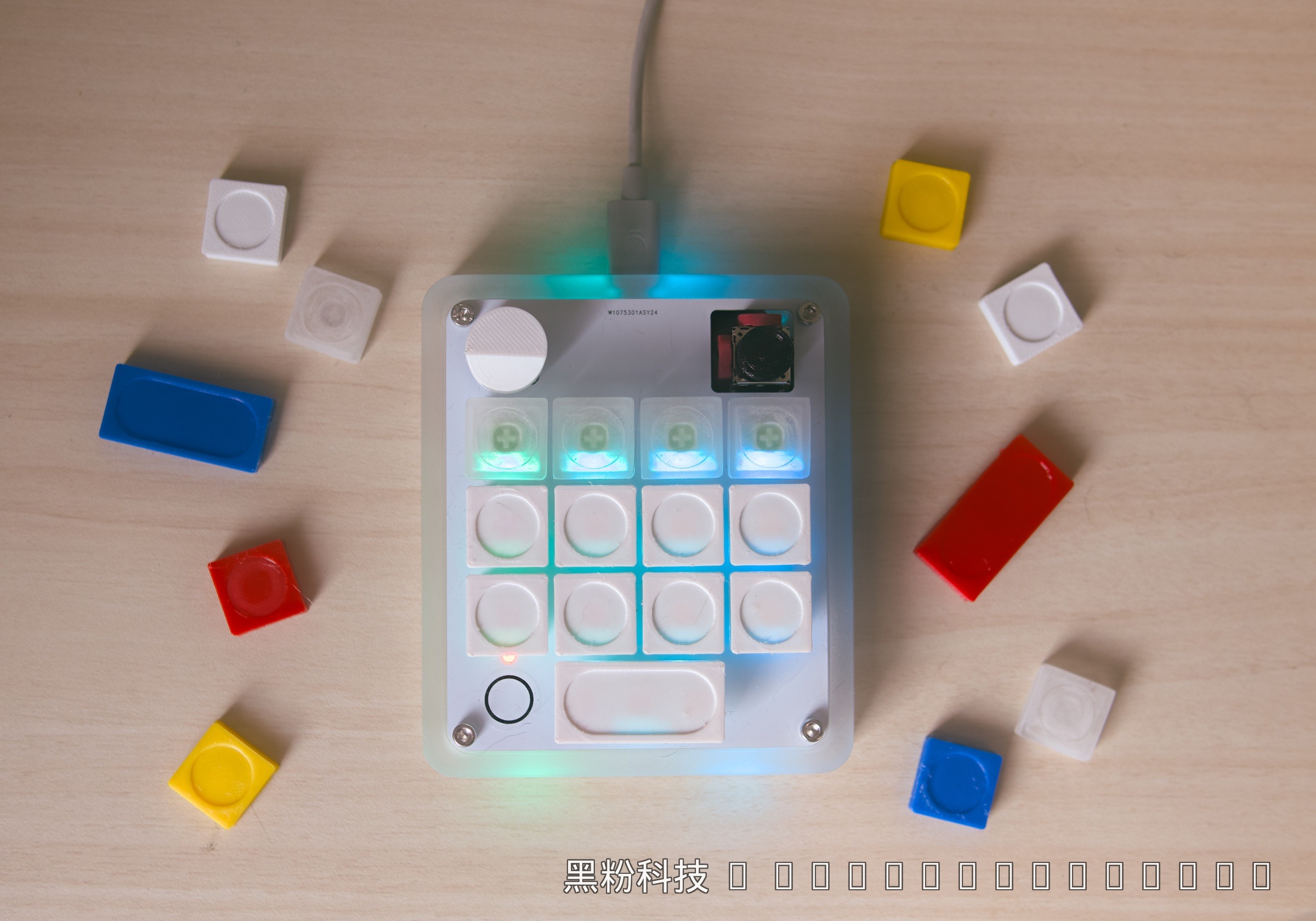
The Codex Micro, originally priced at $230, sold out almost immediately upon release, and buyers faced not whether to place an order, but simply no stock.
Iluvatar Labs’ response was very direct: they built the AgentPad13 from scratch, pushed the cost of the complete device under $40, and made the design public. The price difference was already eye-catching, but the bigger contrast was hidden in the word “public.”
The Codex Micro is a programmable macro keyboard, with dedicated keys and status lights giving the programmed agent a physical entry point. The AgentPad13 doesn’t just pursue a similar look; it retains similar features and design languages, while supporting different programming agents, standard switches, and universal firmware. **It doesn’t replicate a desktop ornament, but a set of interactive methods that can be continuously modified. **
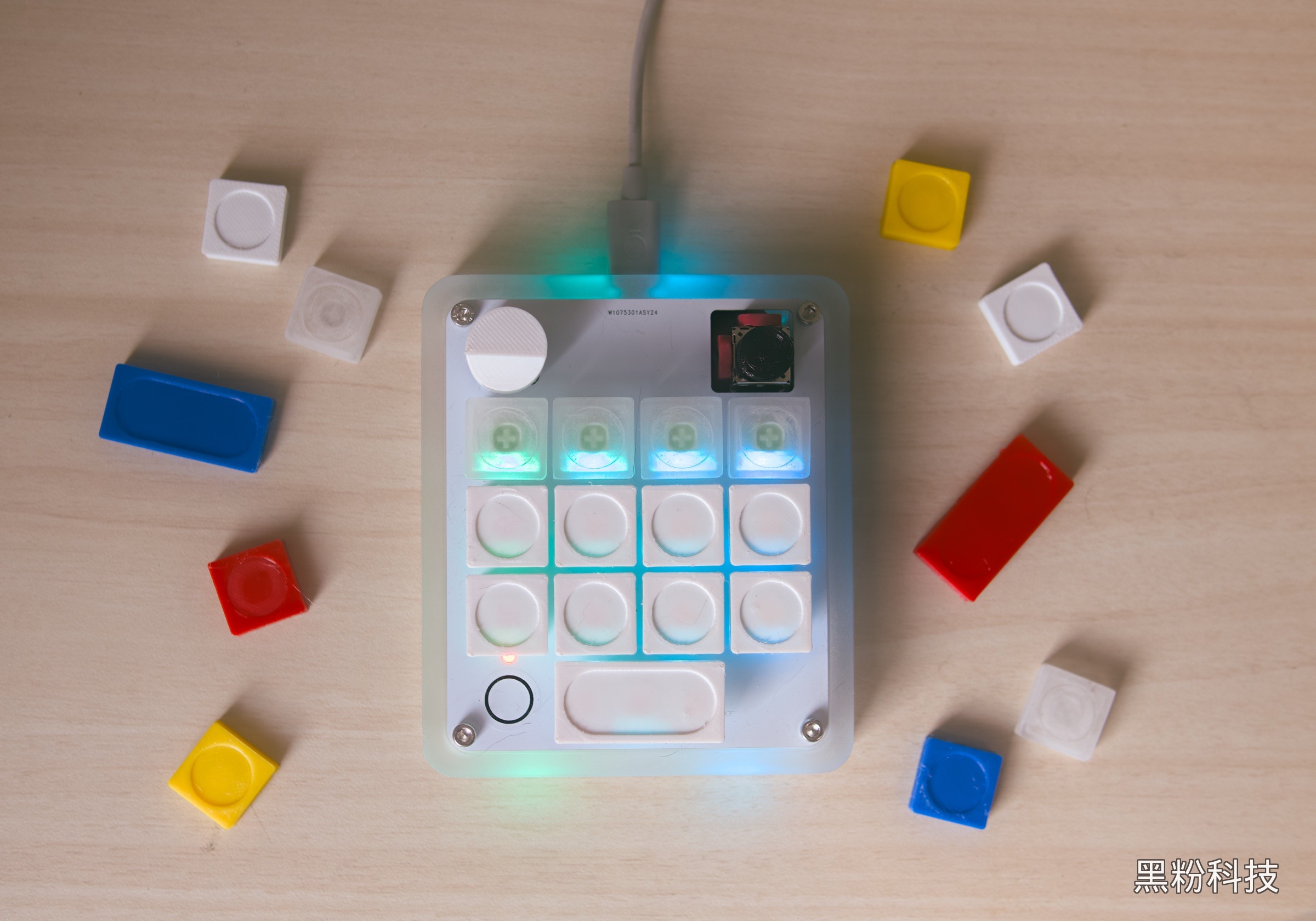
The specific configuration is not modest: 13 hot-swappable buttons, a rotary encoder, analog joystick, capacitive touch, per-key RGB, and edge lighting are all packed in. It also uses QMK/Vial firmware and provides an open agent state protocol. The so-called “low-cost alternative” here does not mean adding fewer parts, but replacing the closed entry behind the scarce finished product. Finished products sell out and manufacture scarcity; open design eliminates scarcity at the entry point.
It’s like a restaurant full of seats, where ordinary people can only wait for a seat; But AgentPad13 lays out the menu, stove layout, and serving logic all together. Of course, you still have to buy parts, weld, and debug, but the choice has shifted from “waiting for restocking” to “buy finished products or build them yourself.” **The choice shifts from the inventory system back to the user. **
$ 上手地址:https://iluvatarlabs.com/blog/2026/08/how-we-cloned-openai-codex-micro/ —— 页面包含 AgentPad13 的技术过程与自行搭建入口。
If you treat it as just a cheap reissue, you might miss the most noteworthy parts. Many industry-changing projects start out like fringe toys: not comprehensive enough, not mature enough, and mainstream customers don’t even bother to look at them. But once these “toys” are cheap enough and allow for disassembly, they attract people who are truly willing to get hands-on, and their capabilities grow along the usage scenarios.
🔍 ▍ The hardest part isn’t drawing the circuit, but running through the last few wires
The team started out almost as novices with PCBs, with only basic circuits, basic soldering, and a bit of middle school physics to remember. Marvin was brought in to tackle this unfamiliar problem. He was originally an independent scientist, able to read materials, synthesize existing work, propose hypotheses, run experiments, and carry what he learned into the next round. **This time, what was truly tested was whether it could step beyond familiar territory. **

Circuit range, wiring planning, and bill of materials don’t get stuck between Fable 5 and GPT-5.6 Sol; the real challenge is placing components on a constrained plane and completing routing. KiCad, FreeRouting, and open-source skills KiCadRouter can build circuit boards, check design rules, and connect most connections. Every time you approach the end, progress stops.
The best result for commercial PCB service Quilter is that 19 out of 353 connections remain unfinished, and the best result for FreeRouting is 18, with both sides close to 95%. The numbers seem just one step away, but the engineering reality is quite the opposite: open areas are easy to trace, but what remains is usually the hardest bone with the fewest paths and the most conflicts.
**// Close to completion does not mean close to availability. **
Quilter paid an unacceptable price to make the result look more like a “finished” one. It compressed the 5V power cable to about 0.153 millimeters, while the actual required was 0.5 millimeters; The copper layer was too close to the mounting holes, and the USB differential cables lost their proper pairing. **The number of unfinished cables decreased, but the boards that could be handed over to the factory became worse. **
| Solution | Surface progress | The real problem |
|---|---|---|
| Quilter | 19 unfinished connections remaining | The power cable is too narrow, the copper layer is close to the mounting hole, and USB pairing is distorted |
| FreeRouting | 18 unconnected connections remaining | Stuck under the constraints of double-layer boards |
| Marvin’s experimental path | Measured by complete design | Also check the connections, power supply, USB, and process rules |
※ “Closer to completion” should not only look at the number of missed connections, but also whether the board can operate normally.
Goodhardt’s Law is not classroom decoration here: **When the number of unrealized numbers becomes the sole goal, the tool starts to cater to that number. **It may narrow power lines or break USB constraints just to make counting look better. The same applies to model leaderboards: once scores outperform real use, optimization quietly deviates from the problem.
⚡ ▍ Marvin stopped blindly trusting routers and turned failures into experiments
The turning point wasn’t switching to a more expensive tool, but a new approach to problem-solving. Marvin no longer saw automatic routers as all-knowing black boxes, but instead read open-source tools, academic cabling research, KiCad documentation, vendor rules, component datasheets, community guides, and workable open-source keyboard layouts. The goal was simple: **Don’t go back into decades of pitfalls accumulated by humanity. **
Then, each attempt validates only one specific strategy: record where improvements and deterioration occur, then bring results to the next round. The experimental path is preserved like a decision tree; if a route stalls, it regresses and combines effective experiences from other branches. It doesn’t rely on a single flash of inspiration but lets failure become an asset that can be called up for the next step. Truly useful intelligence is not about answering quickly, but knowing where to retreat after failure.
This stands in stark contrast to the craze for coding in natural language. Describing requirements does lower the entry barrier, but it also brings a new technical debt: people can get results, but may not understand their own projects. AgentPad13 takes a different path; it doesn’t skip understanding, but instead lets Marvin actively fill in the data, rules, and reasons for failure. **Saving is repetitive work, not engineering judgment. **
This distinction determines whether the agent is advanced auto-completion or a research partner capable of handling long-term tasks. The former excels at providing something that looks like an answer; the latter must retain assumptions, experiments, rollbacks, and constraints. 🧨 In the hardware field, errors do not remain in text boxes; they can directly become disconnected, interference, or unproductive circuit boards.
-
Starting point: The last few connections of the double-layer PCB repeatedly stall
-
├ Direct Actions: Reading tools, papers, documents, rules, and mature layouts
-
├ Experimental Cycle: Validate one strategy at a time, recording improvements and degradations
-
├ Rollback Mechanism: Suppose a stall and then return to an old branch, combining existing experience
-
└ Second-Order Outcome: The process settles into reusable engineering methods, not one-time answers
This causal chain is far more important than “the agent drawing a board.” A single success only proves the result exists; explaining failure and iterating repeatedly shows that the method can be transferred. **The value of AgentPad13 lies not in how many buttons Marvin presses for people, but in how it turns unfamiliar engineering problems into traceable research processes. **

💰 ▍ Double-layer boards are not stingy, but the premise for forty dollars
The project could have increased the PCB from 2 layers to 4 layers. Adding a set of passable planes is like adding an overpass to a congested road; existing tools would likely make things much easier. But this would increase the price by about 50%. Since the goal was cost control, the team stuck to a dual-layer design, not paying extra to cover up algorithmic and engineering shortcomings.
The maximum PCB size is also limited to 100 mm, as factories often raise prices once this threshold is exceeded. These constraints may seem trivial, but they form the true foundation of the $40 solution. 💰 **Low prices have never been magic on the quote, but a series of proactive restraints on size, layers, parts, and craftsmanship. **Cheap doesn’t mean doing fewer features, but refusing to pay extra to avoid problems.
This also explains why open-source design is more valuable than a single finished product. Finished products can only serve those who buy them, but open solutions can be re-selected, switched, cased, and connected to other programming agents by users in different regions. The first-order effect is replacing out-of-stock equipment; the second-order effect is that compatible parts and firmware gain more users; further expansion may lead to new variants.
The beneficiaries are not limited to tinkering individuals. Switches, firmware, circuit board factories, and programming agents may gain new entry points as a result; The pressure falls on those who rely on scarce finished products and closed experiences to gain premiums. The quietest are often the original hardware vendors, because they find it hard to openly oppose low-price compatibility and are unwilling to admit their moat may only be inventory and channels.
However, open solutions don’t automatically turn everyone into a hardware engineer. Parts procurement, welding, firmware flashing, and troubleshooting still take time, and $40 doesn’t mean you get it out of hand. **Tools lower the entry barrier, not the understanding barrier; The cash saved often has to be recovered by hands-on ability. **
🧩 ▍ The real rewritten question is who is qualified to have dedicated tools
For those who just want to use it out of the box, waiting for the original version to restock might be more convenient; For those used to changing their workflow, the AgentPad 13 opens up the options directly. The 13 buttons, knobs, joysticks, and touches aren’t fixed answers—they’re a set of rearranging control interfaces. You can decide what’s worth keeping at hand based on your programming habits.
These devices were once easily understood as desktop toys for high-end users, but their price and shortages further reinforced this sense of identity. Now, complete solutions under $40 bring the discussion back to practicality: can a physical entrance reduce frequent window switching, can status lights make the agent’s progress more intuitive, and do the buttons really match daily repetitive actions?
**Tools are now priced based on efficiency, rather than scarcity. **The most impactful alternatives will turn identity consumption back into efficiency calculations.
In the short term, AgentPad 13 may not make everyone pick up a soldering iron. A more realistic transmission is that some people stick to the original design, some only change the shell and keys, and some connect the open agent state protocol to other devices. Open design acts like a public baseboard; **every participant doesn’t have to start from a blank space, and changes may continue to flow back. **
Projects considered on the edge of toys often grow their main businesses in such low-barrier environments. The difference is that while the toy phase allows trial and error, mature products tend to carry burdens of channels, gross margin, and compatibility. What is most precious about the AgentPad13 at this moment is not how refined it is, but that it allows users to personally fix “not perfect” products.
If you want to get started, the entry point is already set up; If you want to wait for the finished product, you can first figure out why you’re actually paying for it. Next time you encounter a developer hardware that’s sold out again, you might ask: Is its value really in the shell, or in that unwilling method? **My judgment is clear: hardware can sell out, but once the method circulates, the scarcity business is already leaking. **
$ 📚 接着读(都是这个话题的前情)
· LocalBrain:把 Mac 变成私有 AI 盒子
https://hyphentech.top/localbrain-local-ai-box/
$ 🎬 这个话题我做过视频
· 看美剧学英语,多半是「白看」——我写了个免费 Mac 和Win 软件治它|ScreenLex 光影词库
https://www.bilibili.com/video/BV1HgjU6UEe8?from=article_related_video
· 华为韬定律:不是光刻机平替 | 黑粉科技 Hot Take
https://youtu.be/BBu8XmJALTo
Note In short
AgentPad 13 recreated the $230, quickly sold-out Codex Micro route at a cost under $40, and more importantly, it incorporated 13 hot-swappable buttons, knobs, joysticks, touch, lighting, QMK/Vial firmware, and agent state protocols into an open framework. Within 48 hours, Marvin faced the deadlock of double-layer PCB routing and didn’t bypass it with layers or extra pay, instead linking data research, experimentation, rollback, and engineering constraints into a closed loop. Those looking to save money got a hands-on path, while those wanting to sell scarce items received an uncomfortable reminder: once the recipe is public, queuing is no longer the only option.
🧰 Tools I build
I maintain all of these tools myself. Preview builds are clearly labeled; the release pages are the source of truth for downloads, updates and known limits.
Info: HyphenBox Status: Official releases
A radar for free LLM APIs: availability is re-tested continuously, one local interface for all of them, and keys stay on your machine
Info: LocalBrain Status: Official releases
A multimodal MCP toolbox for local models: TTS, Whisper and video generation in one place
Info: ScreenLex Status: Official releases
Learn new words while you watch shows. Free, for Mac and Windows
Info: HyphenScreen Status: Official releases
Screen recording and smart editing in one: a DaVinci-style timeline, automatic redaction and a check of the finished video before export. Free
Quote: HyphenTech Make AI your superpower Local deployment · Free resources · Self-made software https://hyphentech.top
Late nights and burned API credits went in,a cup of tea comes back out — only if you feel like it.
Scan with WeChatPress and hold to save the image, then open it from your album in WeChat Scan

Comments
Loading comments…